

OMS Clinical Services
Existing Patient Login
Our electronic patient portal, MyChart, helps you keep all your oral healthcare information in one easy-to-access place.
Login To MyChartOral Surgery Clinic
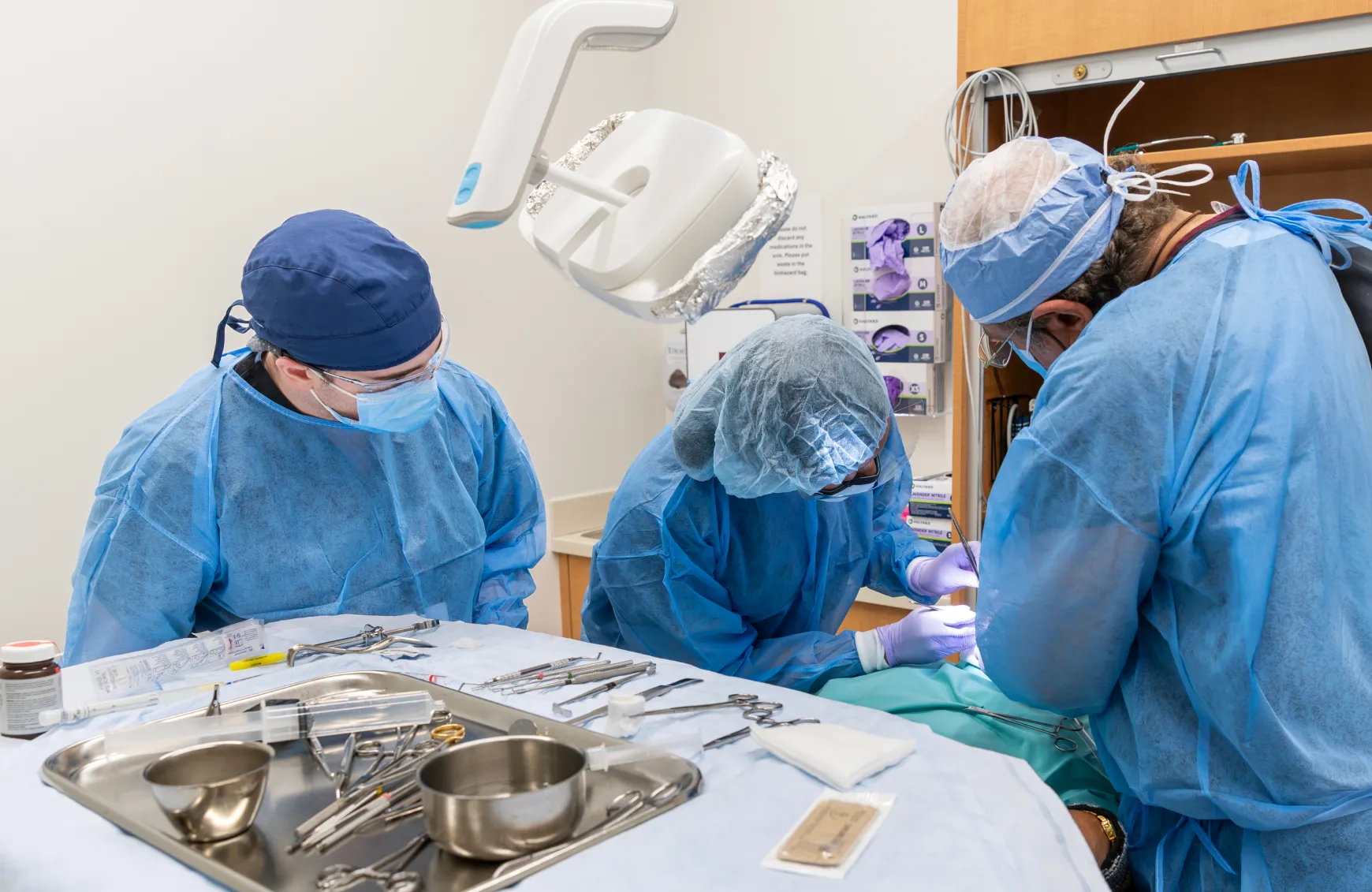
In our Oral Surgery Clinic, we provide patients with both routine and highly complex dental procedures from dental implants to preprosthetic surgery, bone grafting, wisdom tooth removal, oral cancer screening, and more. Should you require expert and consultative care, our team is committed to your needs. At Texas A&M University College of Dentistry we are uniquely qualified…but, the best chance of discovering…is always through regular dental examinations with our colleagues in Comprehensive Dentistry. Patients are commonly referred to us by general dentists, specialty dentists, and private practice oral and maxillofacial surgeons seeking our expert evaluation of suspicious lesions in the oral cavity. While the vast majority of these lesions are found to be benign, a biopsy, performed under local anesthesia in our outpatient clinic, is likely to be recommended. Following the biopsy, a sample of the tissue is sent to a pathologist for evaluation, after which we may or may not recommend further treatment.
Wisdom Teeth Extraction
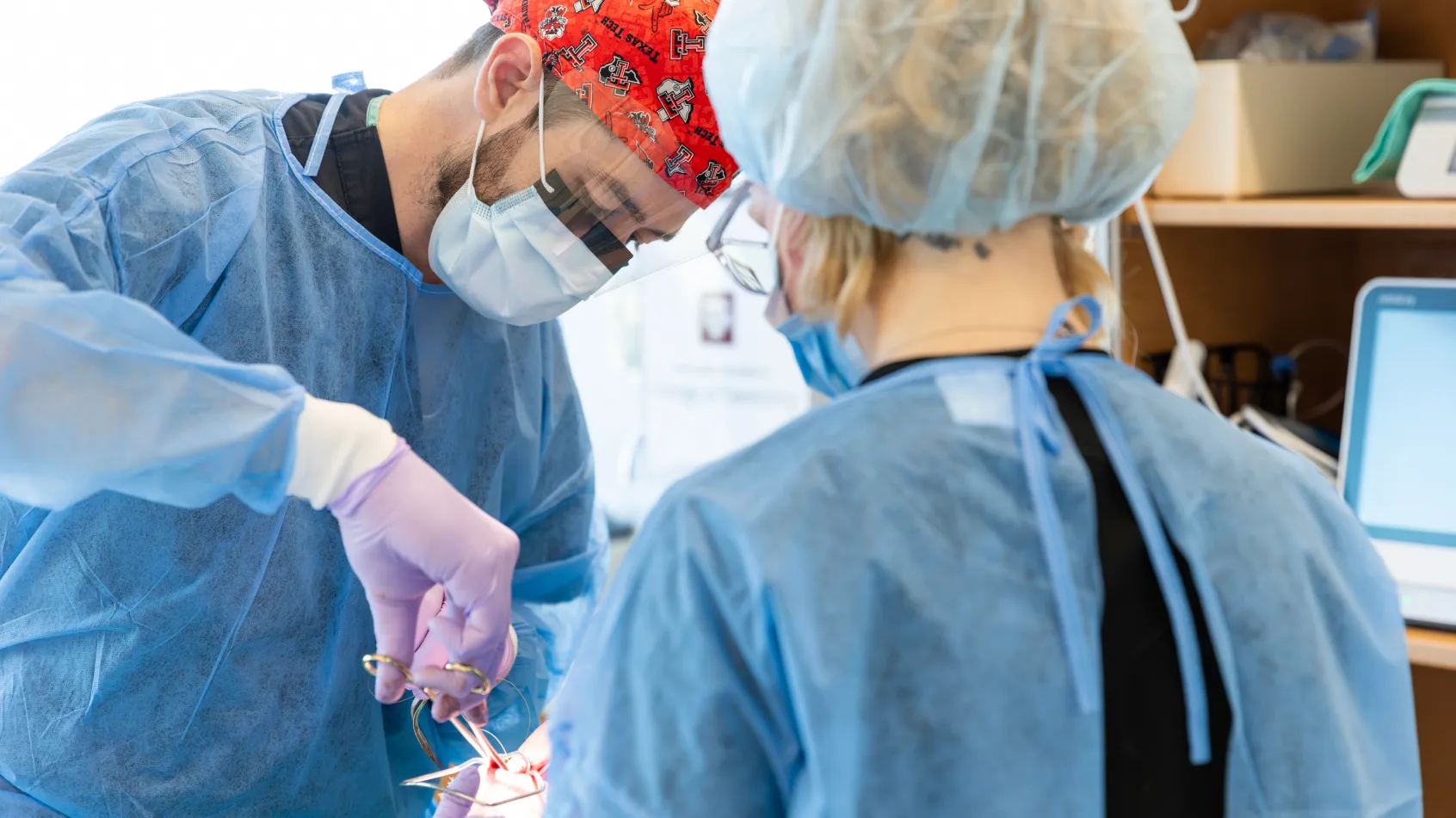
Wisdom teeth are the last to erupt and, when they align properly and the gum tissue is healthy, they do not need to be removed; unfortunately, this is not frequently the case. In an attempt to find a pathway for eruption, impacted teeth will grow in all directions and take up many positions in the bone; like any other organic material, they will find a way to grow and thrive.
Necessity of Extraction
The extraction of wisdom teeth is necessary when they are prevented from properly erupting, which will lead to poorly positioned, impacted teeth that can cause serious oral conditions. When partially erupted, the opening around a wisdom tooth can allow bacteria to grow and eventually lead to infection resulting in swelling, stiffness, pain, and the possibility of severe illness.
Preventing Problems
The pressure from the erupting wisdom tooth may move other teeth and disrupt the orthodontic or natural alignment of teeth. The most serious problems occur when tumors or cysts form around the impacted wisdom tooth, resulting in the destruction of the jaw bone and healthy teeth which can typically be resolved by the removal of the offending impacted tooth or teeth. Early removal is recommended to avoid such problems and minimize the risk involved with more invasive surgical procedures.
Positioning
With an oral examination and radiologic scans of the mouth, our oral surgeons will evaluate the position of the wisdom teeth and predict, with accuracy, whether or not the patient may suffer from future complications. Should it be found that extraction is necessary, the procedure will be performed on an outpatient basis, in our oral surgery clinic, under minimal anesthetic sedation.
Dental Implants
Dental implants are small titanium posts that, when inserted into the jawbone in place of a missing tooth, act as a substitution for the root. After insertion, the bone and new titanium post will fuse together to create a strong foundation for an artificial toot. This process is generally completed in two stages:
Stage One
The initial stage of the procedure, which involves the surgical placement of the titanium hardware, will be performed in our outpatient clinic and surgical center. During the procedure, depending on pain tolerance and other deciding factors, patients will receive either local anesthesia or a light intravenous anesthetic – both options will be explained and discussed during the pre-procedural, consultation appointment. Insertion typically lasts one to two hours in duration and patients are expected to be alert and able to return home the same day. It is common for patients to resume normal eating habits within two to three days and, if required to do so, may wear a partial denture or “flipper” while the initial procedural area heals.
Stage 2
”…osseointegration, which involves a fusing…” This stage of the surgical procedure is typically minor and will be performed with local anesthetic. Immediately following the procedure, the patient should be able to resume all normal activities and, after four to six weeks allowed for healing, the final artificial tooth will be fabricated and attached.
Preprosthetic Surgery and Bone Grafting
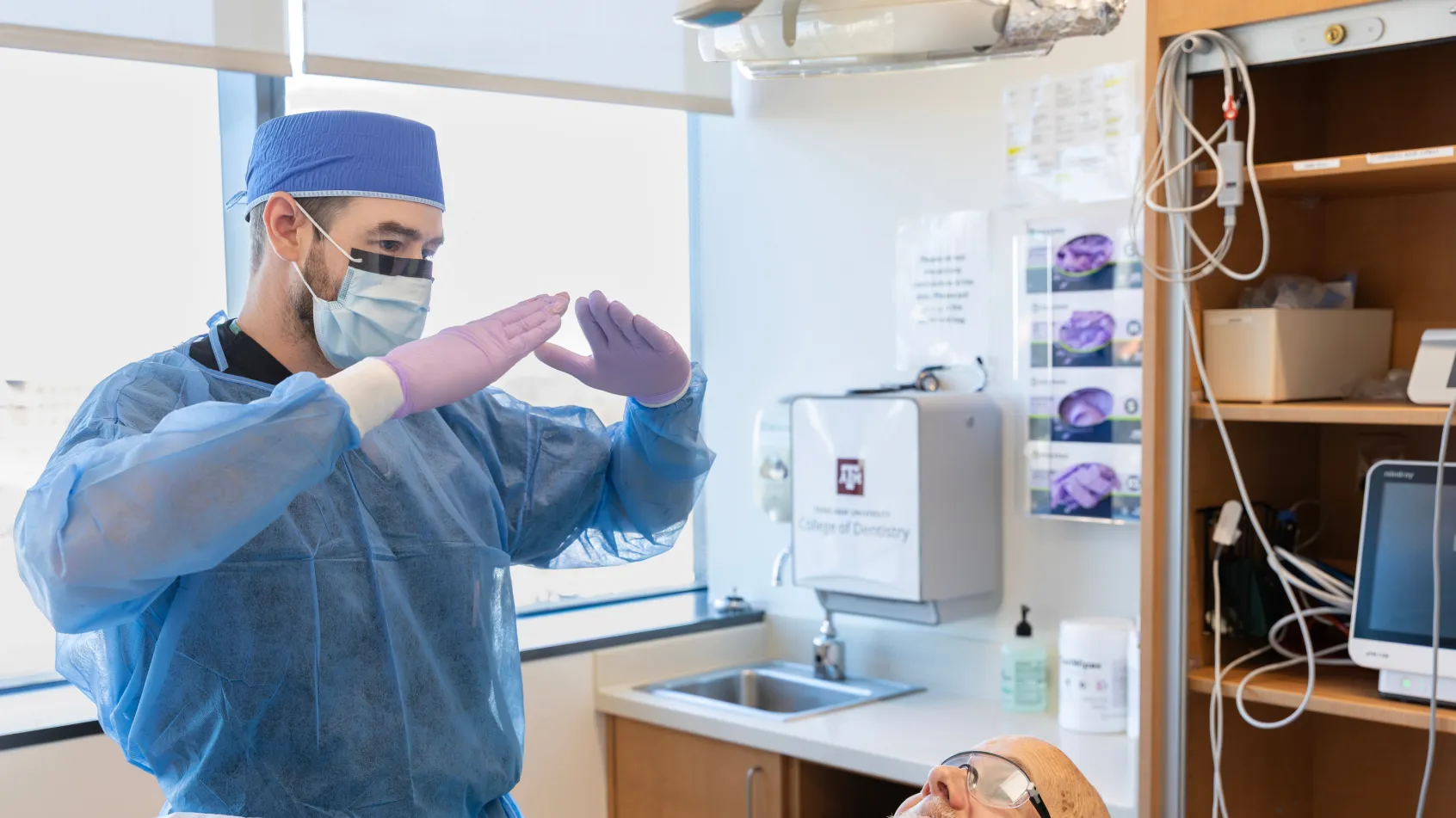
Bone surrounding and supporting the teeth (alveolar bone) is dependent upon tooth function for self-maintenance; once teeth are lost so too is its support and alveolar bone begins to resorb. In years past, a variety of procedures were developed to combat this biologic problem, all of which led to only limited and/or short-term success. The two types of most commonly used bone grafts are either allogenic (synthetic) or autogenous (organic) bone; common donor sites for autogenous tissue include the chin, hip, and shin. Additionally, a modern technique of creating bone with gradual traction (distraction osteogenesis) is possible in selected areas of the body and can performed on an outpatient basis, in our clinic, under intravenous sedation or general anesthesia.
Oral Lesions
The inside of the mouth is lined with a protective mucosa, pink in color, and any alteration to its appearance could indicate, in the most serious of cases, oral cancer. The following signs should be used to signal the need for a pathologic examination:
- Patches in the mouth either red (erythroplakia) or white (leukoplakia) in color
- Mouth sores that fail to heal and bleed easily
- Lumps or thickening of the skin lining the inside of the mouth
- Chronic sore throat and/or hoarseness
- Difficulty chewing and/or swallowing
Clinic Directions and Parking
Paid parking is available on site in our Clinic and Education Building garage at 3000 Gaston Avenue, Dallas, Texas. Entrances are available from Gaston Avenue and Nussbaumer Street.
Map Link To Our ClinicParking Garage Information
- Texas A&M dentistry patients park free with validation
- Parking is free for Texas A&M Dentistry patients with validated ticket from clinic staff at the time of your appointment.
- payment
- Parking rates for non-patients range from $2.00 to a maximum of $10.00. Credit or debit cards can be used at the exit gate or at the Pay Stations located on the first and second floors. Cash can only be used at the Pay Stations.
- metered parking
- There are limited on-street public parking spaces - managed by the City of Dallas - surrounding the campus.